Pages

Sunday, September 7, 2014

OSHA


I am excited to be attending the OSHA conference this year, October 3rd and 4th 2014, in Tulsa, OK. Sadly, it will be my last OSHA conference because I will be moving back home after graduate school. I am most interested in the talks on TBI, CAPD and eliciting /r/. Which topics are you most interested in? Please visit http://www.oslha.org/conference.php for more information about the conference. Hope to see you there.

Laura

Friday, March 7, 2014

2014 Inez Miller Conference on Communication Sciences and Disorders

2014 Inez Miller Conference on Communication Sciences and Disorders
University of Central Oklahoma  - Nigh University Center
Saturday, April 5th, 2014

 Register Here!

Dr. Audrey L. Holland will be discussing

 "Current Issues & Emerging Procedures
in Treating Aphasia”


Wednesday, March 5, 2014

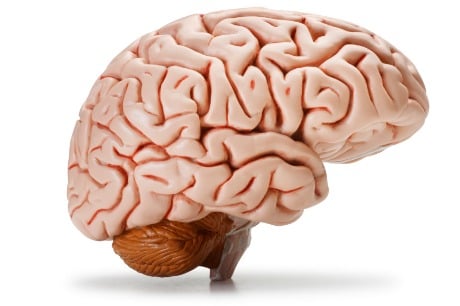
Traumatic Brain Injury Facts

Information below was obtained from http://www.biausa.org/index.htm

A traumatic brain injury (TBI) is a blow, jolt or bump
to the head or a penetrating head injury that disrupts
the normal function of the brain.

• 2.4 million people, including 475,000 children, sustain a
TBI in the U.S. each year. 5.3 million individuals live
with life-long disability as a result ofTBI.

• 52,000 people will die. 275,000 people will be
hospitalized. 1.365 million people will be treated and
released from an emergency department.

• TBI's are caused by caused by falls (35%); car crashes
(17%), workplace accidents (16%), assaults (10%),
and other causes (21%).

• TBI is a contributing factor to a third (30.5%) of all
injury-related deaths in the United States.

• About 75% of TBIs that occur each year are
concussions or other forms of mild traumatic brain
injury (MTBI).

• Just as no two people are exactly alike, no two brain
injuries are exactly alike. For some, brain injury is the
start of a lifelong disease process. The injury requires
access to a full continuum of medically necessary
treatment and community-based supports furnished
by interdisciplinary teams of qualified and specialized
clinicians working in accredited programs and
appropriate settings.

THE COST:

• The costs to treat brain injuries are staggering:

• Average hospital-based acute rehab is about
$8,000 per day

• Range for post-acute residential is about $850 to
$2,500 per day

• Day treatment programs (e.g., 4 hours of therapy)
are about $600 to $1,000 with no room/board

• According to the Centers for Disease Control and
Prevention, in the U.S., direct medical costs and
indirect costs of TBI, such as lost productivity,
totaled an estimated $76.3 billion each year.


Common Causes of TBIs


Falls-  The most frequently occurring include: falling out of bed, slipping in the shower, and falling down the stairs.

Vehicle-related collisions- Collisions involving cars, motorcycles or bicycles.

Violence-  Such as gunshot wounds, domestic violence or child abuse. Shaken baby syndrome can cause traumatic brain injury.

Sports injuries- Injuries from sports, including soccer, boxing, football, baseball, lacrosse, skateboarding, hockey, and other high-impact or extreme sports.

Explosive blasts and other combat injuries- Explosive blasts are a common cause of traumatic brain injury in active-duty military personnel.

All information was obtained from http://www.mayoclinic.org/diseases-conditions/traumatic-brain-injury/basics/causes/con-20029302

Image obtained from http://www.brainscienceinstitute.org/stories/center_for_brain_imaging_science_story

Sunday, February 2, 2014

Oral Motor Videos on YouTube

I am doing research for Oral Motor with little ones and I liked these videos.


Oral Motor on YouTube!

Saturday, February 1, 2014

2014 Cimarron Conference on Communication Disorders


The 2014 Cimarron Conference will be on April 11, 2014 in Stillwater, OK. John D Halloran, M.S., CCC-SLP will be the guest speaker and he will focus on the use of AAC with children with ASD. I personally am very interested in ASD and any way I can help serve this population.
Here is a link to the 2014 Cimarron Conference on Communication Disorders 

19th Annual Route 66 Conference

I will be attending the 19th Annual Route 66 Conference and I can't wait. The workshop will focus on practical strategies and materials for monolingual English-speaking clinicians who serve English Language Learners with language disorders. I can't wait to see how I can apply what I learn to my clinical experiences.

If you are in Tulsa on February 28, 2014, I hope to see you there.


Here's a link to the conference page:

19th Annual Route 66 Conference

Monday, September 9, 2013

Parkinson's Disease

       I have the privilege of working with a client in their 60's who has been diagnosed with Parkinson's Disease (PD). They are extremely frustrated with their situation and I hope to help ease their frustrations. As with many PD clients, we have begun working on loudness and increasing breathing capacity through exercises. Both are common symptoms of PD. Here is some quick information about the disease.

 The Parkinson's Disease Foundation

Statistics

  • Parkinson's Disease affects as many as 1 million Americans.
  • 60,000 people are diagnosed every year. 
  • 4% of people are diagnosed before 50 years of age.

The National Center for Voice and Speech

  •  75-90% of people with PD have a speech or voice disorders.
  •  Speech Characteristics: 
    • reduced loudness
    • monopitch
    • hoarseness
    • breathy voice 
    • articulation errors
  • PD patients may not be aware of their soft speech. 
  •  Swallowing Disorder Symptoms: 
    • Coughing
    • Choking
    • Difficulty swallowing food and medication
    • Drooling
    •  Weight loss 
     I have been using an app on the iPad which measures loudness. There are several decibel meter apps which are reasonably priced. The visual feedback in large font really helps the client to monitor their loudness.
      
     People with PD benefit from therapy that focuses on the loudness of their voice. As SLPs (in training) we need to help these clients retrain their perception of loudness. I also use a feather from a feather duster for breathing exercises. These items were suggested to me by the client's previous graduate clinician. 

Things I Have Learned

     I have learned that collaborating with my peers is probably one of the best resources. If you can talk to the clinician who treated your client, do it and ask questions.
     
      As a first year, I feel like all I do is ask questions. But it is better to ask, than to walk around lost and confused. Plus, supervisors like to teach you their way of doing things and it helps build a relationship between you and your supervisor.

Laura


Sunday, September 8, 2013

Speech Treatment in Parkinson disease: Sharon Kha's Story


This is an amazing story about a program I hope to learn more about.

Auditory Processing Disorder (APD)

What I have Learned About Auditory Processing Disorder in Two Weeks...


      Each of my clients this semester are very different. One client has the diagnosis of Auditory Processing Disorder(APD) and I knew nothing of this disorder. I even asked my friend who is a psychologist and she could not tell me much. So what did I do you may ask? RESEARCH!!!!

      My good friend www.google.com had an abundance of resources. So here is the quick and dirty rundown on APD.

Statistics from 

National Coalition of Auditory Processing Disorders

  • APD affects how the brain processes auditory information (i.e. language).
  • APD causes difficulty in processing verbal information and a person's ability to ignore background noise.
  • Experts do not agree on a definition for APD .
  • What experts do agree on:  
    •  There is a breakdown in receiving, remembering, understanding, and using auditory information.
    • Hearing ability is adequate. 
    • There is a neurological basis.
    • The child’s ability to listen is impaired. 
  • ADD or ADHD is commonly associated with APD. 

Treatment 

Lindamood Phoneme Sequencing Program

       
        My client had completed the Lindamood Phoneme Sequencing Program a.k.a. the LiPS program. So I needed to learn it over a weekend in order for me to know what she knows. So, I learned as much as I could, but I am weak at best in its implementation. I can see that she understands it well, which is great for me. I hope to fully understand LiPS soon. Here is a link to the website LiPS
      I can say the LiPS program starts at the phoneme level and makes each phoneme a tactile experience. The program has fun names for each phoneme (consonants) based on manner, placement and voicing. 
     There are Orthographic Expectancies, which are spelling rules to follow. There are also different techniques used to determine "fair" words which follow the ruIes, and "unfair" words which are exceptions to the rules. 
     A vowel circle is used as a step ladder system to explain manner and placement of each of the vowels. I noticed the back of the manual had information for SLPs who work/speak different dialects of English. I thought that was very interesting.
      The LiPS kit comes with colorful cubes used to represent phonemes. They are used to practice manipulation of sounds. It also has felt squares, but I am not sure what their use is. My client has already surpassed this level with her previous graduate clinicians.
       

My Therapy Sessions

       Since my client is further along, we are working more toward her complete independence and application of the knowledge she gained going through the LiPS program. Mainly, her school work is used as an opportunity for her to apply her knowledge. I have also been using various articles appropriate to her abilities and reading level. Writing skills are also will also be improved and a rubric is used to evaluate the essays written by the client.

       By far, there is more information about APD all over the internet. Also, many other techniques can be used in treatment. Please leave feedback about the helpfulness of this post or its lack thereof.

Laura

Group Articulation Data Collection

         Articulation data collection in a group therapy setting was a challenge for me. Especially, because my supervisor stressed the importance of my clients having a large number of opportunities for my kiddos to respond. I had two children, I used this template and found it worked well for me. You may make any changes you deem needed. Let me know how it has worked for you or if it didn't work at all. Please rename the file and save it to your computer when you click on the link.

Click Here--> Group Articulation Data Collection
 

About Me

Hey y'all,

         I recently moved to Stillwater, OK in mid- July to begin the Speech Pathology graduate program. This is my first semester and I am extremely excited. I am mostly working with adults this semester. They are a little out of my comfort zone; with that said, it has been about two weeks and I love them. 
         Previously, I was a preschool teacher. There is where I discovered my love for speech, language and communication. I had been exposed to all kinds of children with various differences: English as a second language learners, articulation disorders, developmental delays, autism spectrum disorder, selective mutism and stuttering.
        I hope to document my experiences with you all on my journey to earning my CCC's. I will share with you the knowledge I gain and I hope you will do the same.

Go Pokes!

Laura